
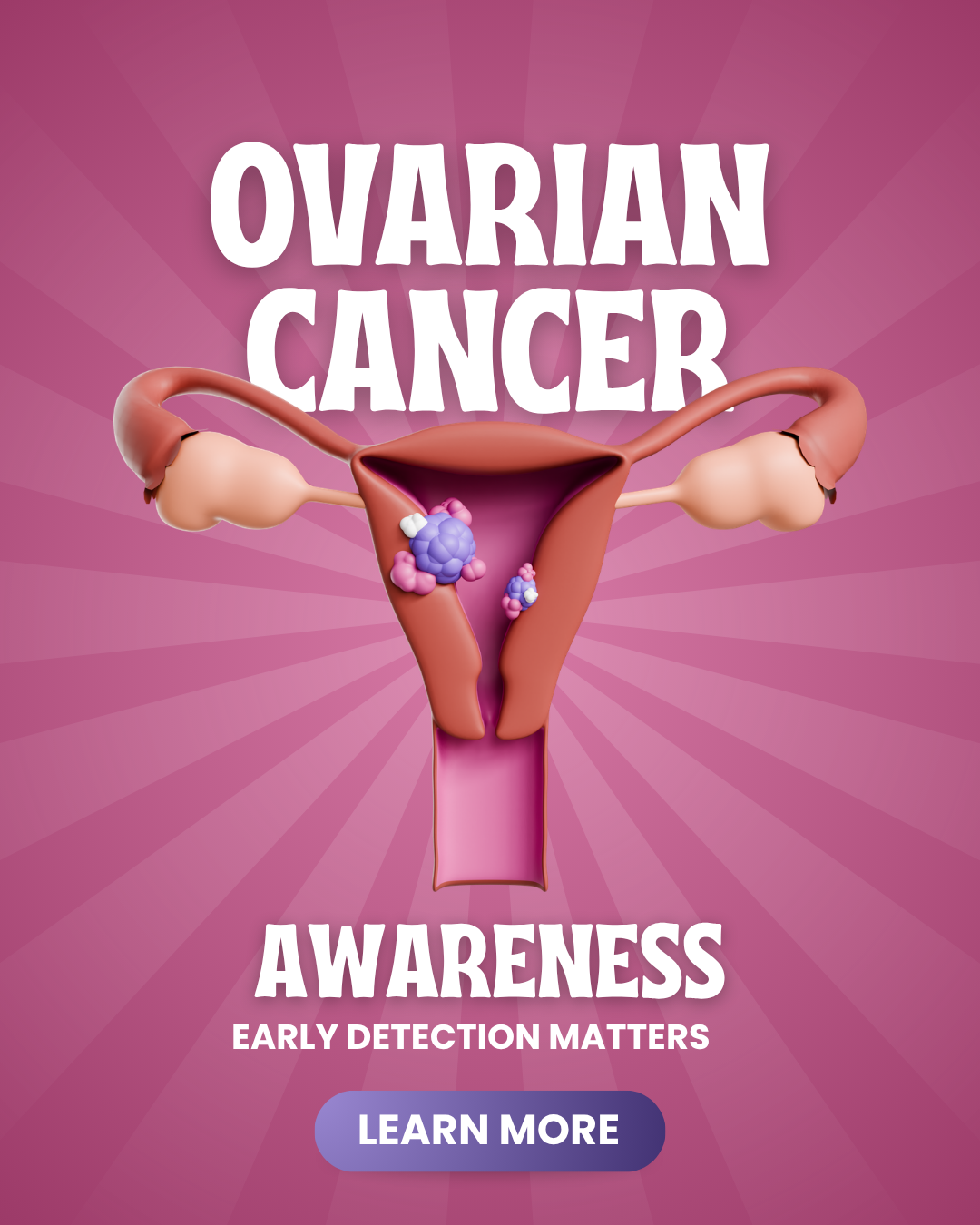
Every year, World Ovarian Cancer Day comes and goes, but many women still don’t realise how close this conversation is to home.
Especially for women over 35.
Because at this stage of life, our bodies begin to change, and it becomes easier to dismiss certain symptoms as “just age,” “just hormones,” or “just stress.”
But sometimes, it’s more than that.
Let’s talk about what we often overlook.
In many African homes, women are taught to endure.
You keep going.
You manage the discomfort.
You don’t complain unless it’s serious.
So when you start feeling constantly bloated…
Or notice a dull, persistent pain in your lower abdomen…
Or realise you feel full faster than usual…
It’s easy to explain it away.
But these are the moments where awareness matters most.
What is ovarian cancer?
Ovarian cancer happens when abnormal cells begin to grow in the ovaries, the organs responsible for producing eggs and important hormones.
It is often referred to as a “silent disease,” not because there are no symptoms, but because the symptoms are subtle and easy to ignore.
And for women over 35, those symptoms can easily be mistaken for normal body changes.
Signs that deserve your attention:
They may not feel urgent, but they are important:
- Persistent bloating that doesn’t go away
- Pelvic or abdominal pain
- Feeling full quickly, even when you haven’t eaten much
- Frequent or urgent need to urinate
These signs do not automatically mean cancer.
But when they are new, consistent, and unusual for your body, they should not be ignored.
This matters more for women over 35 because as we grow older, we often become busier with careers, family, and responsibilities. Our health can quietly move to the background.
And because many symptoms of ovarian cancer are similar to common digestive or hormonal changes, they are often overlooked until much later.
This is not about fear.
It’s about awareness.
You are allowed to pay attention to your body.
You are allowed to ask questions.
You are allowed to seek medical advice.
You are allowed to take your symptoms seriously.
In cultures like Nigeria, where women are expected to “be strong,” it is easy to ignore what your body is trying to say. But strength also means choosing to listen.
So,
Do not normalise discomfort that feels unfamiliar.
Do not dismiss changes that persist.
Do not wait until it becomes unbearable.
If something feels off, follow up on it.
Speak to your doctor. Ask questions. Get clarity. You deserve that.
Let’s keep the conversation going
This World Ovarian Cancer Day, let’s move beyond awareness and into action.
Let’s check in with our bodies.
Let’s talk to each other.
Let’s encourage the women around us to pay attention, too.
Because sometimes, the difference between early detection and late discovery…
is simply not ignoring the signs.
